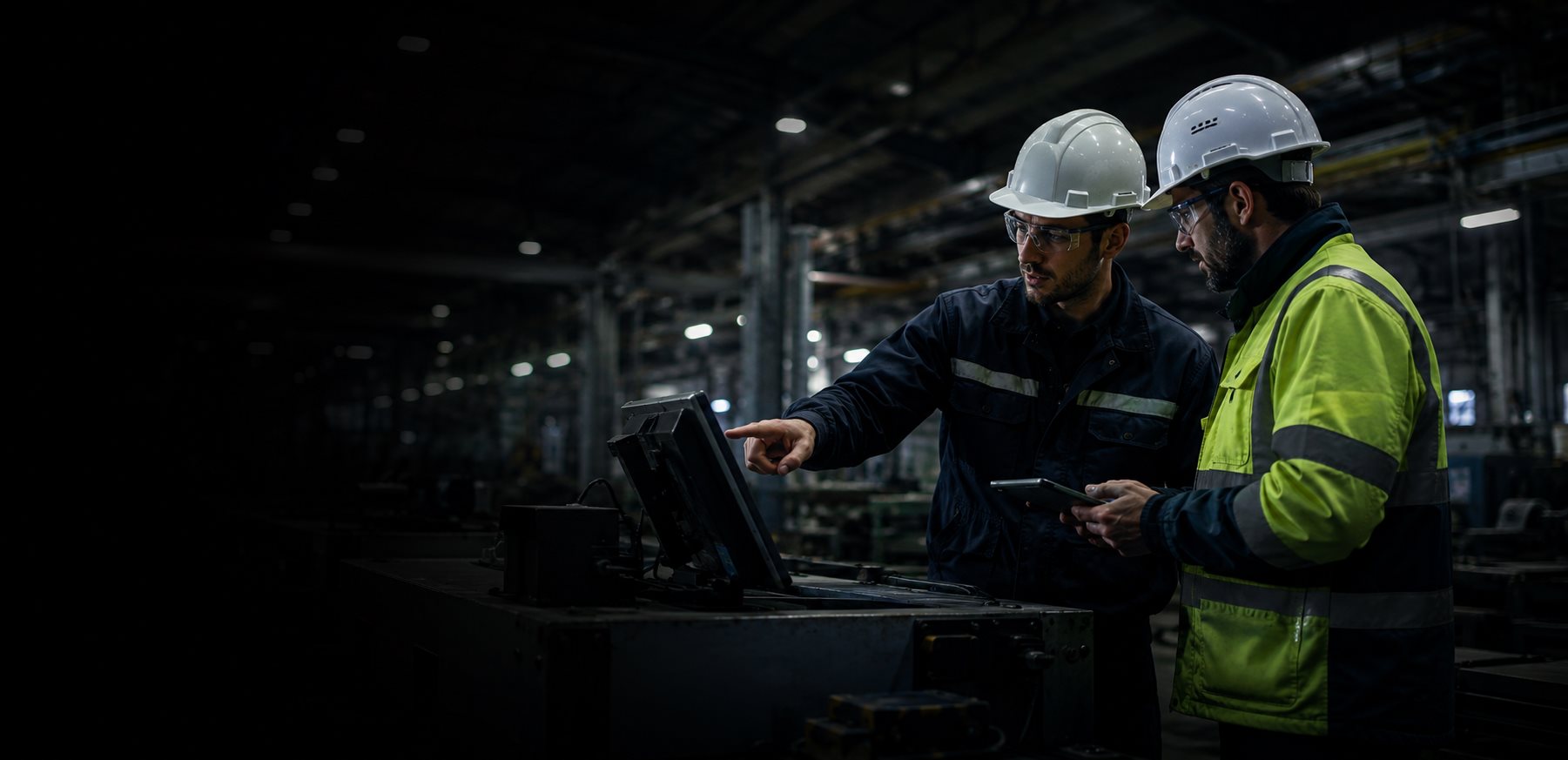
One of the first questions a plant asks about a humanoid robot has a clear, practical answer: what do you do with a humanoid robot when it breaks down. A robot on a live line will stop mid-shift, and a well-run pilot plans for the stop so the station keeps moving rather than waiting on it. Three kinds of stop are worth telling apart before a pilot: a planned stop to charge, an unplanned stop when something goes wrong, and the stop a person forces when the area changes. This page reads what makers publish about each, and what a site settles before the first robot arrives.
The charge stop, planned into the shift
The stop a plant can plan for is the charge. Agility Robotics published the Digit 5 specification on September 15, 2026: a battery that runs for 90 minutes and charges in 9, a 10-to-1 run-to-charge ratio, which Agility says enables more than 20 hours of productive work in a 24-hour day. A cycle that short means the robot leaves the station often and briefly, so the work waiting for it has to hold for those minutes.
That is why a plant decides early where the charger sits. When Agility's co-founder listed what its buyers ask about before a deployment, one item was where chargers can be bolted down (The Robot Report, September 15, 2026). A charger far from the station turns a 9-minute charge into a longer walk each way, and the walk comes off the work the robot completes.
The unplanned stop, and who restarts it
The other stop is the one nobody planned. At Schaeffler's plant in Cheraw, South Carolina, a Digit humanoid tends a stamping press for about 8 hours a day, moving baskets of bearing components to a washer, and one Agility contractor oversees it (Futurism, March 17, 2026). A person watching the cell is part of how a stop is handled today: someone is there to see the robot halt and to get it working again.
So the question to ask of any pilot is what happens between the stop and the restart. Does the robot recover on its own, or does a person step in, and how long does either take? A published uptime figure is only as good as the recovery behind it, because every minute the robot is stopped and waiting is a minute off the count.
Who has already run humanoids on a line, and on which tasks, is the record we keep on a separate page, and it is the place to see which stops other operators have designed around.
The stop a person forces
The third stop is the one a person decides on. An operations adviser wrote in September that once factory systems can ask a robot to act, a request should not stay valid after maintenance changes the area, and that a robot needs to give an operator a clear stop option (LinkedIn, September 15, 2026). On a floor, that is the difference between a robot that keeps following an old instruction and one a person can halt the moment the work around it changes.
At Cheraw the robot works inside a Plexiglas enclosure to meet current US safety rules (Futurism, March 17, 2026). The enclosure and the stop control answer the same worry from two directions: one keeps people out of the cell, the other lets a person stop the robot in it.
What a site settles before the first robot
The three stops turn into a short list a plant works through before a pilot, not after.
- Where the charger is bolted down, and how far the robot walks to it, since a short charge with a long walk is not a short stop.
- What happens at an unplanned stop: whether the robot recovers on its own or a person restarts it, and how long that takes.
- How a person stops the robot, and how a request to it expires when maintenance or a changeover alters the area.
- Who is watching the cell during a shift, and what that person does when the robot halts.
How long a robot runs between those stops, and how a charge cycle shapes the station plan, is set out with the published figures on a separate page.
Reading the stops against your own line
Every one of these stops maps onto a number a plant already keeps: minutes down, who responded, how long until the station ran again. A humanoid does not change what those numbers are, only what causes them, so a pilot is read the same way a line is read today.
In a Consultation, we walk one station on your floor through each of the three stops, and set out what recovery, charging and a stop control would have to do for a humanoid to hold that station on your shift.